Sep 30, 2026
Nov 11, 2026
Share on :
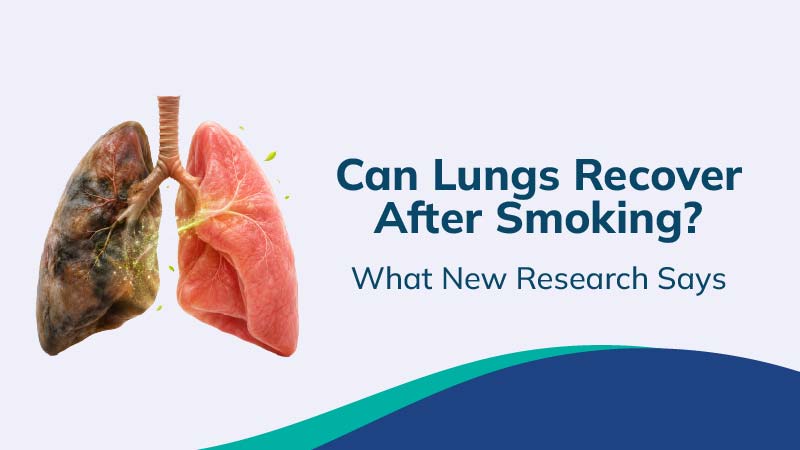
You might be familiar with the usual quit-smoking timelines, but they often miss a more important question
Recent studies on how lungs recover after smoking go further than just looking at cough or breathing tests. They focus on individual lung cells, small airways, and the signals that control how lung tissue repairs itself.
The reality is more complicated than a simple countdown to recovery. Lung healing after smoking involves several processes that can improve at different speeds, and some changes may not go back to normal.
This makes quitting an important first step. For people who find nicotine withdrawal and cravings difficult to manage, smoking-cessation support may include counselling, follow-up and, where appropriate, Nicotine Replacement Therapy (NRT).
A nicotine transdermal patch is one NRT option. It delivers nicotine through the skin, without cigarette smoke, and can help manage nicotine withdrawal symptoms and cravings while a person works towards stopping smoking. The right smoking-cessation approach should be discussed with a healthcare professional.
Educational information only, not medical advice. Please consult your doctor.
Here’s what new studies from 2025 and 2026 are teaching us.
Researchers combined single-cell RNA-sequencing data from three studies covering 21 individuals: 9 never smokers, 5 current smokers, and 7 ex-smokers.
This method looks at gene activity in single cells, rather than averaging results from an entire tissue sample.
The researchers found that smoking-related changes differed between cell types
This shows that recovery can be selective. If one group of cells improves, it doesn’t always mean the whole lung is healed.
The study was small and included different people, not the same individuals over time. It also didn’t track recovery patterns, and gene activity alone doesn’t show how well the lungs work.
Recent research suggests a better question is
Which cells and functions recover, and which ones don’t?
For people who continue smoking because quitting feels difficult, understanding nicotine dependence is also important. Stopping exposure to cigarette smoke requires stopping smoking, but nicotine withdrawal can make that process challenging. This is where evidence-based smoking-cessation strategies, including NRT where clinically appropriate, may have a role.
Researchers looked at CT scans from 1,869 ex-smokers to see if time since quitting was associated with airway structure.
For people with breathing problems, those who had quit smoking longer had a lower airway wall area percentage, which means their airways may have changed for the better.
The same significant association was not seen in the lung-healthy group after adjustment for other factors.
It suggests that some airway changes might improve the longer someone stays smoke-free.
However, this study only looked at people at one point in time. It doesn’t prove that airways get thinner over time or that damaged lung parts grow back. The researchers say we need studies that follow people over time.
For anyone interested in lung recovery after quitting smoking, this difference is important. There’s some evidence that airway structure can improve, which is good news, but it doesn’t mean the lungs are fully restored.
And staying smoke-free matters. For people struggling with nicotine dependence, a nicotine patch (NRT) may be considered as part of a structured smoking-cessation plan under healthcare professional guidance. Rather than exposing the lungs to cigarette smoke, a nicotine transdermal patch delivers nicotine through the skin to help manage withdrawal symptoms while quitting.
The research: A 2025 study in the American Journal of Respiratory and Critical Care Medicine
Researchers looked at 1,628 current and former smokers aged 55-79 using spirometry, CT and oscillometry.
Spirometry checks how much air you can blow out during breathing tests. Oscillometry looks at how your lungs work by measuring small pressure changes while you breathe normally.
The study found small airway dysfunction in 26% of people with normal airflow on spirometry. This group also showed airway structural abnormalities and worse quality of life than those with normal results.
So, even if your spirometry test looks normal, it might not explain all the reasons for ongoing breathing problems.
These figures are from a selected group with quite substantial tobacco exposure. They cannot be generalised to all smokers or ex-smokers. The study was also cross-sectional and so could not tell us who would go on to develop COPD.
After quitting smoking, it’s great to feel better and see normal test results. But if you’re still short of breath, it’s important to find out why.
“My breathing still holds me back. Does my current assessment account for that?”
This helps start a conversation with your doctor, without needing every advanced test right away.
If you are still smoking, the same appointment can also be an opportunity to discuss nicotine dependence and available cessation support. A healthcare professional can determine whether behavioural counselling, NRT such as a nicotine patch, or another appropriate smoking-cessation strategy should form part of your quit plan.
One emerging approach is to use mRNA to deliver the instructions for making hepatocyte growth factor (HGF), which is a protein involved in tissue repair.
Researchers looked at lung-targeted delivery using lipid nanoparticles in experimental emphysema models, as well as human tissue datasets and lab-grown human organoids.
In mouse models, the approach improved lung function, reduced inflammation, and decreased cell death. Analyses also showed increased activity linked to proliferation and differentiation of alveolar type 2 cells, which help repair alveoli.
This is a big area of research: finding ways to help the lungs repair themselves.
However, these are preclinical findings, not evidence that mRNA therapy has restored damaged lungs in patients. Organoids are in vitro models, not treated patients. Clinical efficacy, delivery, dosing, and safety still need investigation.
When it comes to lung damage from smoking, future treatments might focus on helping the lungs repair themselves. But this research does not mean there is a treatment available for patients yet.
Is this promising science? Yes. But it’s not a reason to delay quitting smoking.
Importantly, smoking-cessation therapies and experimental lung-regeneration therapies serve very different purposes. NRT does not regenerate damaged lung tissue. Its role is to support smoking cessation by providing nicotine through a transdermal route and helping manage nicotine withdrawal and cravings as part of a quit plan.
All these studies show that we need to look at recovery in several different ways.
| Level of Recovery | What Researchers Are Examining |
|---|---|
| Molecular | Whether gene-activity patterns differ between current, former and never-smokers |
| Structural | Whether airway measurements are associated with time since quitting |
| Functional | Whether small-airway abnormalities exist despite preserved spirometry |
| Regenerative | Whether experimental treatments can stimulate repair in laboratory and animal models |
These are separate questions. Good results in one area don’t always mean recovery in others. That’s the main takeaway from the research above.
This makes conversations about smoking and lung health more meaningful than just talking about a single recovery percentage.
What you can control is your exposure to cigarette smoke going forward. If nicotine dependence is making quitting difficult, you do not necessarily have to rely on willpower alone. Evidence-based smoking-cessation support can include behavioural counselling and medication, including NRT where appropriate.
Describe changes in everyday life such as walking pace, stair climbing, repeated infections, or breathlessness during routine tasks.
Ask if your check-up explains your symptoms and whether more tests are needed. The aim is to get a personal assessment, not just a list of test results.
A 2025 randomised trial involving 630 people undergoing lung cancer screening compared different ways of providing smoking-cessation support. The researchers found benefits from integrating specialist cessation care into the screening setting.
This study looked at ways to help people quit, not at lung repair. What matters is that the way support is given can make a difference, not just the choice to quit.
You can ask
Nicotine Replacement Therapy (NRT) provides nicotine without requiring cigarette smoking. Its purpose is to reduce the withdrawal symptoms and cravings that can make quitting difficult.
One form of NRT is the nicotine transdermal patch. The patch gradually delivers nicotine through the skin, providing a steadier source of nicotine than the rapid nicotine exposure associated with smoking.
Nicosive Nicotine Transdermal Patch is a prescription-only NRT option. The right strength and treatment plan are decided by your doctor, based on your smoking pattern, nicotine dependence and clinical circumstances.
Nicosive should therefore be viewed as support for the process of quitting smoking, not as a treatment for existing lung damage.
Stopping smoking removes continued exposure to cigarette smoke, while the lungs' subsequent recovery depends on factors such as previous exposure, existing disease and the type of damage present.
Educational information only. Nicosive is prescription-only; use it only as advised by your doctor.
For someone asking, “Can lungs heal after smoking?”, another practical question is
“How can I successfully stop exposing my lungs to cigarette smoke?”
For nicotine-dependent smokers, NRT can form part of that conversation.
A nicotine transdermal patch offers a different route of nicotine delivery from smoking. Nicotine is absorbed through the skin rather than inhaled through cigarette smoke.
A nicotine patch provides nicotine replacement through the skin, and your doctor can choose an appropriate strength as part of an individual cessation plan.
NRT is intended to help manage nicotine withdrawal and cravings. It does not make smoking harmless, reverse established lung disease, or directly repair damaged lung tissue.
For best results, smoking-cessation medication can be accompanied by behavioural support and professional follow-up.
Talk to your doctor about whether NRT is appropriate for your quit plan and which strength is suitable for you.
When you see a headline about lung regeneration, check
A headline can sound like a big breakthrough, but the research is still early.
Recent research is helping us get a clearer answer.
Some abnormalities appear to resolve, while others remain detectable. Imaging offers clues about long-term airway differences, and newer tests reveal problems conventional measurements may miss. Regenerative treatments are being investigated, but lab success is still far from proven patient benefit.
For someone thinking about quitting, the useful question is
“What can improve from where I am now, and what support will help me get there?”
Quitting smoking remains the action you can take now. If nicotine dependence is making that difficult, evidence-based support can help.
Nicosive Nicotine Transdermal Patch is a prescription-only NRT option that can be discussed with your healthcare professional as part of an appropriate smoking-cessation plan.
Talk to your doctor about your next step towards a smoke-free life.
Some changes appear to improve. In recent studies, certain cell pathways and some airway measurements looked better in ex-smokers, while others stayed altered. Recovery is not the same in every part of the lungs, and staying smoke-free matters.
There is no single timeline. Different parts of the lung recover at different speeds, and some changes may not go back to normal. One CT study found that people with breathing problems who had been smoke-free for longer had a lower airway wall area percentage, but it was a one-time snapshot and does not prove that airways thin over time. Your doctor can help you understand your own situation.
Yes, it can. In a study of 1,628 current and former smokers aged 55–79, 26% of people with normal spirometry still had small airway dysfunction. This was a selected group, so the result cannot be applied to all smokers. If you are still short of breath, ask your doctor whether your assessment explains your symptoms.
Scientists are studying ways to help lungs repair themselves, such as mRNA therapy tested in mouse models and lab-grown human tissue. These findings are early, and no such treatment is available for patients yet. It is not a reason to delay quitting.
A nicotine patch is a form of Nicotine Replacement Therapy (NRT). It gradually delivers nicotine through the skin, without cigarette smoke, to help manage withdrawal symptoms and cravings while you work towards quitting. It does not make smoking harmless or repair damaged lung tissue.
Yes. Nicosive Nicotine Transdermal Patch is a prescription-only NRT option. Whether it suits you, and which strength, is decided by your doctor based on your smoking pattern, nicotine dependence and clinical circumstances.
Educational information only. Nicosive is prescription-only; use it only as advised by your doctor.
2026 – Cellular changes after quitting (Translational Research)
Single cell RNA-sequencing meta-analysis identifies the molecular signature of smoking cessation on the human lung.
Transl Res. 2026. https://doi.org/10.1016/j.trsl.2026.06.012
February 2025 – CT evidence on airway structure (European Journal of Radiology)
CT-based airway changes after smoking cessation in the general population.
Eur J Radiol. 2025;183:111905. https://doi.org/10.1016/j.ejrad.2024.111905
2025 – Small-airway dysfunction despite preserved airflow (American Journal of Respiratory and Critical Care Medicine)
Oscillometry-defined Small Airway Dysfunction in Tobacco-exposed Adults with Impaired or Preserved Airflow.
Am J Respir Crit Care Med. 2025. https://doi.org/10.1164/rccm.202501-0028OC
2026 – Experimental lung regeneration research (European Respiratory Journal)
Lung-targeted hepatocyte growth factor mRNA restores alveolar structure in experimental emphysema.
Eur Respir J. 2026;68(3):2502323. https://doi.org/10.1183/13993003.02323-2025
2025 – A randomised trial of cessation support (JAMA Internal Medicine)
Smoking Cessation Interventions in the Lung Cancer Screening Setting: A Randomized Clinical Trial.
JAMA Intern Med. 2025;185(3):284-291. https://doi.org/10.1001/jamainternmed.2024.7288
This content is for educational purposes only and is not a substitute for medical advice. Nicosive is a prescription-only medicine. Please consult your doctor before starting or changing any treatment.
Continue Reading
Hello Aravind Useing Sticky Here Testing scroll
Hello Aravind Useing Sticky Here Testing scroll
Hello Aravind Useing Sticky Here Testing scroll
Hello Aravind Useing Sticky Here Testing scroll
Hello Aravind Useing Sticky Here Testing scroll
Hello Aravind Useing Sticky Here Testing scroll
Hello Aravind Useing Sticky Here Testing scroll
Hello Aravind Useing Sticky Here Testing scroll
Hello Aravind Useing Sticky Here Testing scroll
Hello Aravind Useing Sticky Here Testing scroll
Hello Aravind Useing Sticky Here Testing scroll
Hello Aravind Useing Sticky Here Testing scroll
Hello Aravind Useing Sticky Here Testing scroll
Hello Aravind Useing Sticky Here Testing scroll
Hello Aravind Useing Sticky Here Testing scroll
Hello Aravind Useing Sticky Here Testing scroll
Hello Aravind Useing Sticky Here Testing scroll
Hello Aravind Useing Sticky Here Testing scroll
Hello Aravind Useing Sticky Here Testing scroll
Hello Aravind Useing Sticky Here Testing scroll
Hello Aravind Useing Sticky Here Testing scroll
Hello Aravind Useing Sticky Here Testing scroll
Hello Aravind Useing Sticky Here Testing scroll
Hello Aravind Useing Sticky Here Testing scroll
Hello Aravind Useing Sticky Here Testing scroll
Hello Aravind Useing Sticky Here Testing scroll
Hello Aravind Useing Sticky Here Testing scroll
Hello Aravind Useing Sticky Here Testing scroll
Hello Aravind Useing Sticky Here Testing scroll
Hello Aravind Useing Sticky Here Testing scroll

Nicosive Nicotine Transdermal Patch. A structured, step-down approach to smoking cessation with 24-hour controlled nicotine delivery.
Quick Links
Nicosive Nicotine Transdermal Patch. A structured, step-down approach to smoking cessation with 24-hour controlled nicotine delivery.