Sep 30, 2026
Jul 30, 2026
Share on :

Most people expect quitting to feel like loss. What they don't expect is how quickly the body starts winning.
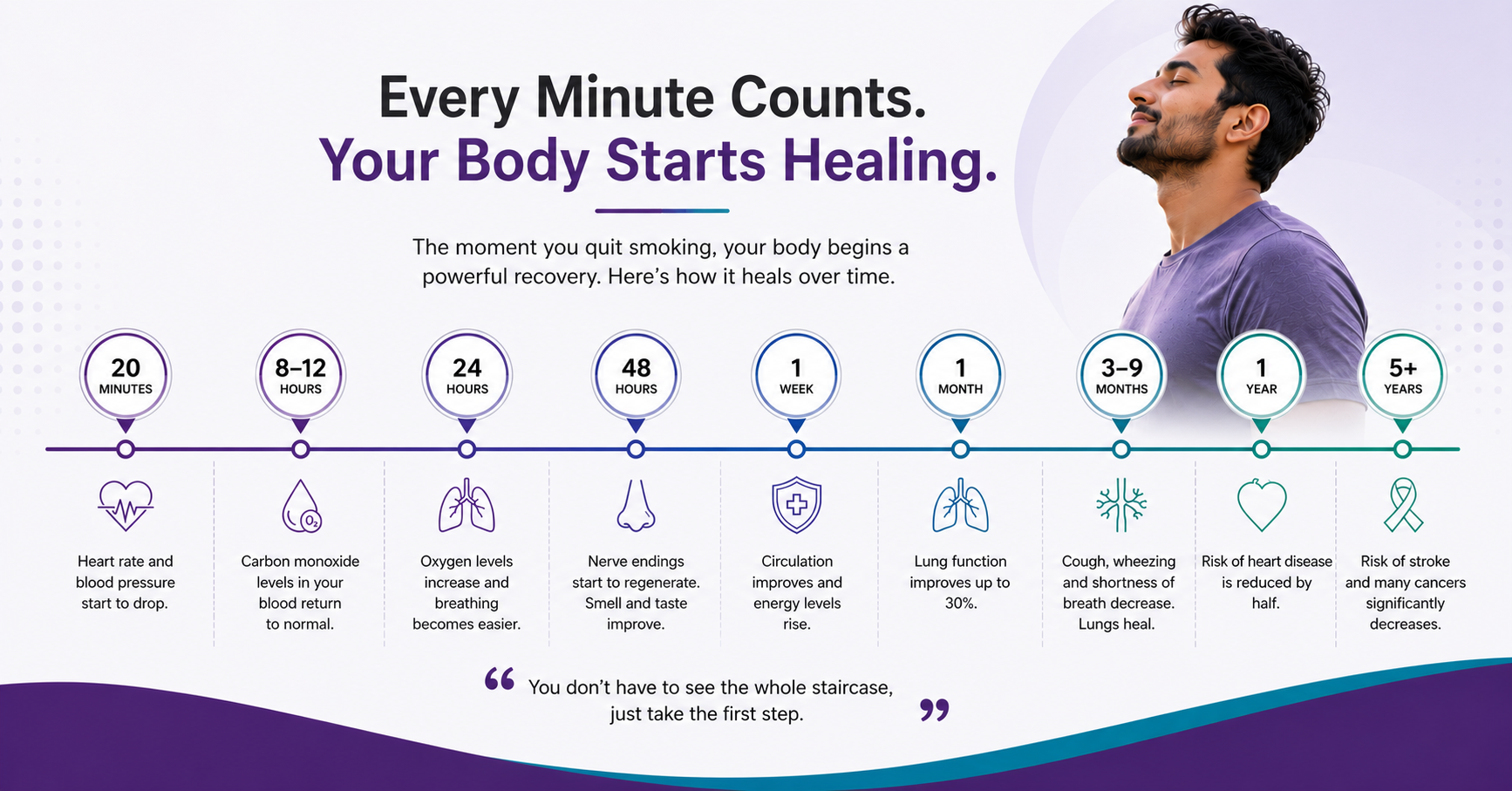
Twenty minutes. That's all it takes for your heart rate to begin returning to normal after your last cigarette. Not twenty days. Not twenty weeks. Twenty minutes.
But here's what nobody tells you clearly enough: the days right after quitting are also when withdrawal hits hardest. Cravings. Irritability. Broken sleep. That gap - between when healing begins and when it becomes noticeable - is exactly where most quit attempts fall apart.
This guide maps that gap honestly. What's happening inside your body, hour by hour and week by week. What feels hard and why. And what 'better' actually looks like as it arrives.
Here's exactly what this guide covers:
Every cigarette delivers over 7,000 chemicals into the body - more than 70 of them linked to cancer. Nearly every organ is affected: the lungs, heart, blood vessels, and even the skin.
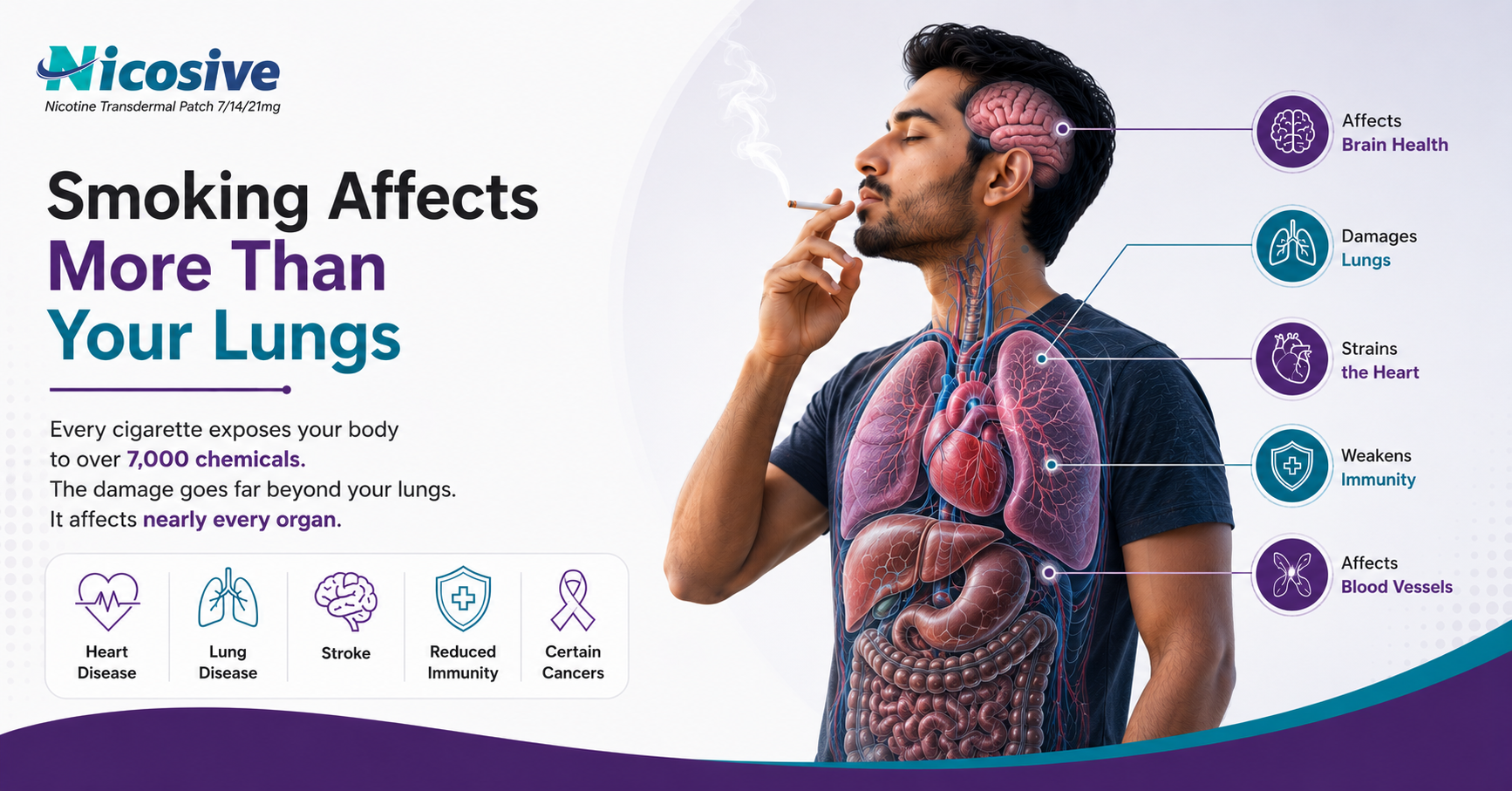
Smoking increases the risk of:
The good news - and this is real - is that the damage is not permanent for most people. The body begins repairing itself within minutes of stopping. Not weeks. Minutes. Here's the proof.
After 20 Minutes
Your heart rate - which rises with every cigarette smoked
Twenty minutes. Before you've even gone to sleep after your last cigarette, your cardiovascular system has already begun responding.
After 8-12 Hours
By hour 8, the carbon monoxide that cigarettes forced into your bloodstream starts clearing. Oxygen - the thing your organs actually need - begins reclaiming that space.
As oxygen levels improve:
This is also when the first wave of cravings can build. Your brain is registering that nicotine levels are falling - and it will ask, loudly, for more. This is normal. This is the process working.
After 24 Hours
The body starts removing nicotine from the bloodstream.
At this stage, some people may begin experiencing:
These symptoms are not signs that something is wrong. They are signs that your body is recalibrating - adjusting to producing dopamine on its own terms again, without nicotine doing the work for it. It is uncomfortable. It is also temporary.
After 48 Hours
For many people, this is the hardest stretch of the entire quit journey.
During this stage:
Nicotine is now almost fully cleared from your bloodstream. Your brain knows it - and it protests. This is peak withdrawal. The good news: it only goes down from here. Research shows that structured nicotine replacement, used under medical guidance, is designed specifically to reduce the intensity of this phase - so the habit can be addressed without a biological crisis happening at the same time.
After 1 Week
Many smokers notice:
One week in - and the physical withdrawal is beginning to ease. What may remain now is different: not your body craving nicotine, but your mind reaching for a cigarette out of habit. The morning chai. The work break. The moment after a meal. These triggers are not biological.
They are learned. And unlike withdrawal, they can be consciously unlearned - one situation at a time.
Smoking is often connected to emotions, routines, and coping mechanisms.
Some people may feel:
during the first few weeks after quitting.
This emotional adjustment is normal and often improves gradually as the brain adapts to life without nicotine dependence.
Support from:
can make recovery easier and more sustainable.
After 1 Month
Lung function begins improving more noticeably.
A month smoke-free. Most people at this point report something they did not expect: they feel better than they thought they would. Stamina is returning. Stairs feel different. The cough that woke them at 3am is quieter. The body has been working this entire time - you just hadn't given it enough quiet to be heard.
After 3-9 Months
Something remarkable is happening inside your lungs right now.
Many smokers experience:
Your lungs are regrowing the tiny hair-like structures called cilia that years of smoke had damaged. These are the lungs' natural cleaning system - they sweep out mucus, bacteria, and debris. Their return means fewer chest infections, less mucus, and easier breathing. Not just for this year. For the rest of your life.
After 1 Year
One of the biggest long-term benefits of quitting smoking permanently appears after one year.
Your lungs are regrowing the tiny hair-like structures called cilia that years of smoke had damaged. These are the lungs' natural cleaning system - they sweep out mucus, bacteria, and debris. Their return means fewer chest infections, less mucus, and easier breathing. Not just for this year. For the rest of your life.
After 5 Years and Beyond
Long-term recovery continues over several years.
At 5 years, your risk of stroke falls to a level comparable to someone who has never smoked. At 10 years, your risk of lung cancer is approximately half that of a continuing smoker. At 15 years, the risk of coronary heart disease matches that of a lifelong non-smoker. The body does not forget. But it rebuilds - steadily, measurably - for every year you give it the chance.
Nicotine addiction affects both the body and the brain. When smoking suddenly stops, withdrawal symptoms can appear while the body adjusts.
Some people experience:
For most people, physical symptoms peak within the first 72 hours and begin easing by Week 2. What can persist longer is the psychological adjustment - and that is a different challenge entirely, deserving its own honest conversation.
The intensity depends on:
One of the most common concerns smokers have is:
How long do nicotine cravings last after quitting?
The answer varies from person to person.
Cravings are usually strongest during:
This happens because nicotine levels in the body are dropping rapidly.
Even after physical withdrawal improves, psychological cravings may continue occasionally for weeks or months.
Common triggers include:
For most people, physical symptoms peak within the first 72 hours and begin easing by Week 2. What can persist longer is the psychological adjustment - and that is a different challenge entirely, deserving its own honest conversation.
Smoking cessation products, nicotine replacement therapies, medications, and withdrawal management approaches should only be used under the guidance of a qualified healthcare professional or doctor. Every individual’s medical condition, nicotine dependence, and recovery process are different. Do not self-medicate without professional advice.
Practical Tips to Manage Nicotine Cravings
Recovery becomes easier when smokers actively manage triggers and build healthier routines.
Stay Hydrated
Drinking water can help reduce oral cravings and support overall recovery.
Keep Your Hands and Mind Busy
Helpful activities include:
Avoid Trigger Situations Initially
Some smokers benefit from avoiding:
especially during the early recovery phase.
Focus on Small Wins
Instead of thinking about quitting forever, focus on:
Small progress builds long-term success.
The body’s ability to heal after smoking is remarkable.
Long-Term Quit Smoking Benefits Include:
Many people also notice improvements in:
Most people who have quit smoking permanently did not succeed on their first attempt. Research suggests the average person makes eight to ten serious quit attempts before succeeding for good. That is not a failure rate. That is a learning curve. Each attempt reveals something - a trigger that was underestimated, a moment when support was absent, a situation that needed a different strategy.
Recovery is often a gradual process involving:
If you have relapsed, the right response is not shame. It is a conversation with your doctor about what the next attempt looks like - better supported, better planned, better understood.
1. What happens to your body after quitting smoking?
Your body starts healing within minutes after quitting smoking. Blood circulation improves, oxygen levels increase, and over time the lungs and heart begin recovering from smoke exposure.
2. How long does it take for the lungs to recover after quitting smoking?
Lung recovery varies from person to person. Many people notice easier breathing and reduced coughing within a few weeks to months after quitting.
3. What are common withdrawal symptoms after quitting smoking?
Common smoking withdrawal symptoms include:
4. How long do nicotine cravings last after quitting?
Nicotine cravings are usually strongest during the first few days after quitting. Over time, cravings become less frequent and easier to manage.
5. Does quitting smoking improve breathing?
Yes. Many smokers notice improved breathing, reduced wheezing, and better stamina after quitting smoking as lung function gradually improves.
6. Can the body fully recover after quitting smoking?
The body has a strong ability to heal after smoking cessation. While recovery depends on smoking history and overall health, quitting smoking significantly reduces long-term health risks.
7. What are the long-term benefits of quitting smoking permanently?
Long-term benefits may include:
8. Is it normal to feel tired after quitting smoking?
Yes. Fatigue can happen during the early stages of smoking withdrawal as the body adjusts to life without nicotine.
9. What helps reduce nicotine cravings naturally?
Helpful ways to manage cravings include:
10. When should I seek medical help after quitting smoking?
If withdrawal symptoms are severe, persistent, or affecting your ability to function at work or at home - or if you have heart disease, high blood pressure, diabetes, or are pregnant - speak to a doctor before or during your quit attempt. A medically supported cessation plan significantly improves your chances of long-term success.
Your body began healing the moment your last cigarette ended. Not eventually. Immediately.
The timeline above is not a promise of how it will feel - the early days are genuinely hard. But it is a record of what your body is already doing, right now, whether you can feel it yet or not.
Twenty minutes. Eight hours. One week. One year. Five years. Each milestone is not a future reward. It is a process already in motion.
The hardest part of quitting is rarely knowing what to do. It is having enough support to hold on through the moments when everything in you is pulling the other direction. That support - whether it comes from a doctor, a structured plan, or the one person in your life who knows you are trying - is what changes the odds.
If you are on this journey, keep going. If you are thinking about starting it, start with a conversation with your doctor about the right plan for you.
This article is part of a patient awareness initiative by Nicosive, Nicotine Transdermal Patch 7/14/21mg, from Hetero Healthcare. For more resources on structured smoking cessation, visit nicosive.com.
1. NHS England. Benefits of quitting smoking. NHS Better Health. 2023.
2. Hughes JR et al. Shape of the relapse curve and long-term abstinence among untreated smokers. Addiction. 2004.
3. Hartmann-Boyce J et al. Nicotine replacement therapy versus control for smoking cessation. Cochrane Review. 2018.
4. British Heart Foundation. Stopping smoking - your heart and circulation. BHF.org.uk.
5. Ministry of Health & Family Welfare. Global Adult Tobacco Survey India 2016-17.
Continue Reading
Hello Aravind Useing Sticky Here Testing scroll
Hello Aravind Useing Sticky Here Testing scroll
Hello Aravind Useing Sticky Here Testing scroll
Hello Aravind Useing Sticky Here Testing scroll
Hello Aravind Useing Sticky Here Testing scroll
Hello Aravind Useing Sticky Here Testing scroll
Hello Aravind Useing Sticky Here Testing scroll
Hello Aravind Useing Sticky Here Testing scroll
Hello Aravind Useing Sticky Here Testing scroll
Hello Aravind Useing Sticky Here Testing scroll
Hello Aravind Useing Sticky Here Testing scroll
Hello Aravind Useing Sticky Here Testing scroll
Hello Aravind Useing Sticky Here Testing scroll
Hello Aravind Useing Sticky Here Testing scroll
Hello Aravind Useing Sticky Here Testing scroll
Hello Aravind Useing Sticky Here Testing scroll
Hello Aravind Useing Sticky Here Testing scroll
Hello Aravind Useing Sticky Here Testing scroll
Hello Aravind Useing Sticky Here Testing scroll
Hello Aravind Useing Sticky Here Testing scroll
Hello Aravind Useing Sticky Here Testing scroll
Hello Aravind Useing Sticky Here Testing scroll
Hello Aravind Useing Sticky Here Testing scroll
Hello Aravind Useing Sticky Here Testing scroll
Hello Aravind Useing Sticky Here Testing scroll
Hello Aravind Useing Sticky Here Testing scroll
Hello Aravind Useing Sticky Here Testing scroll
Hello Aravind Useing Sticky Here Testing scroll
Hello Aravind Useing Sticky Here Testing scroll
Hello Aravind Useing Sticky Here Testing scroll

Nicosive Nicotine Transdermal Patch. A structured, step-down approach to smoking cessation with 24-hour controlled nicotine delivery.
Quick Links
Nicosive Nicotine Transdermal Patch. A structured, step-down approach to smoking cessation with 24-hour controlled nicotine delivery.