Sep 30, 2026

Experience a fresh start with the Nicosive Nicotine Transdermal Patch. Designed for 72-hour controlled support, it helps manage cravings quietly so you can focus on your work, your family, your life.
Nicotine dependence doesn’t disappear overnight. But the right support can stay with you all day long.

Tobacco addiction is not a lack of willpower. It's a biological trap.
Each cigarette creates a rapid nicotine spike in the brain. Then comes the crash. That spike-and-crash cycle fuels the next craving. And the next.
In India alone, tobacco claims over 13 lakh lives every year. Millions want to quit. Many try. Few succeed without support.
Breaking the cycle requires stability. Not spikes.
Quitting smoking is not a single challenge. It is three challenges happening at the same time.
Biology. Psychology. Environment.
Understanding this “triple threat” allows a realistic and structured approach.
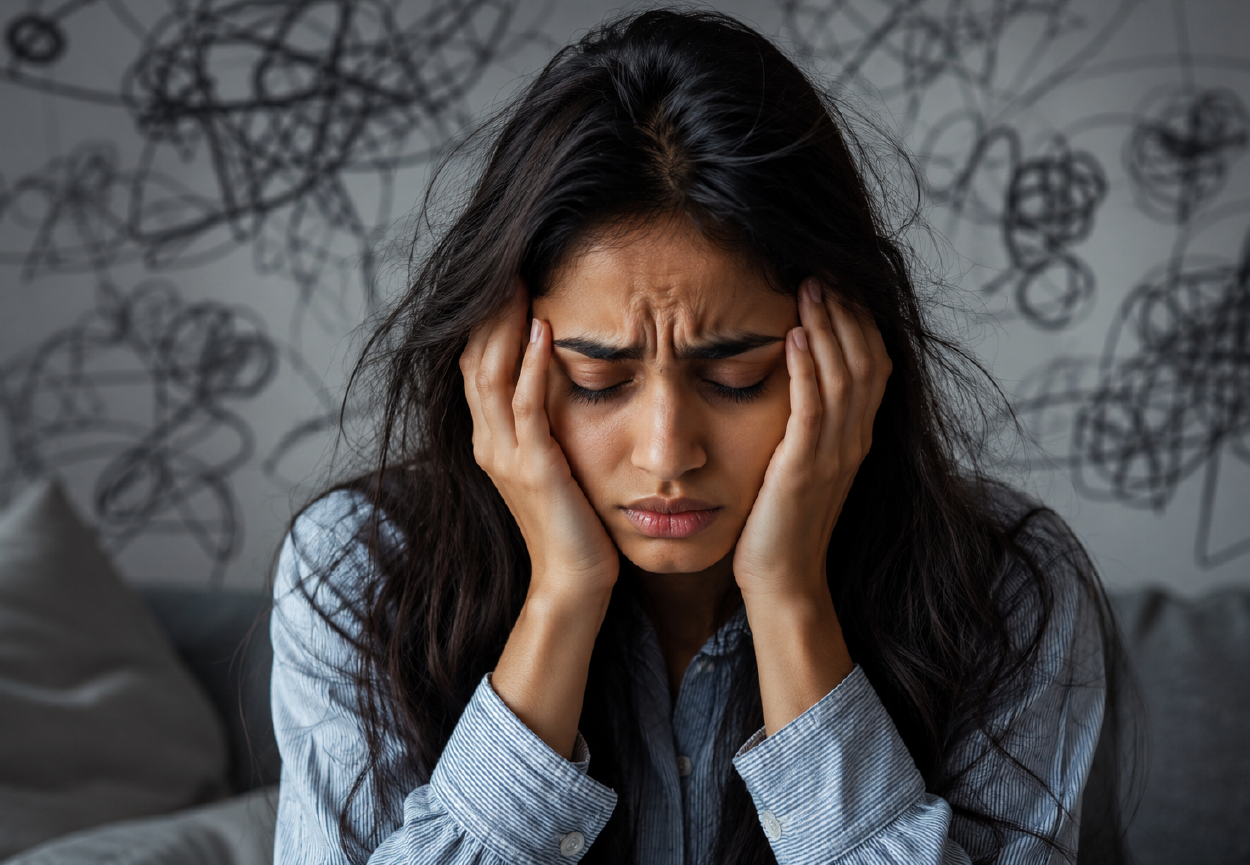
When nicotine intake stops, withdrawal begins.
Common symptoms include:
Irritability
Anxiety
Headaches
Poor concentration
Strong cravings
Sleep disturbances
Increased appetite
Symptoms often begin within hours and peak in the first days to weeks.
Relapse during this phase is usually driven by neurochemical discomfort - not lack of motivation. Managing withdrawal intensity is critical.
Smoking becomes tied to daily routines:
Common symptoms include:
Stress relief
Reward after tasks
Emotional coping
Focus before meetings
Nicotine creates a tension-relief loop that reinforces dependence. Breaking this bond requires:
Stabilizing withdrawal
Developing healthier coping strategies
Without both, something may feel “missing” even after physical symptoms improve.
Smoking is embedded in:
Tea breaks
Alcohol consumption
Social gatherings
Workplace stress
Travel routines
Triggers can activate cravings even weeks after quitting.
Long-term success depends on preparing for triggers - not reacting to them.
The problem in tobacco addiction is not nicotine alone - it is rapid fluctuation.
Fast nicotine spike
Rapid dopamine surge
Quick drop
Return of craving

Using Transdermal Drug Delivery System (TDDS) technology, it delivers controlled nicotine slowly through the skin into systemic circulation.
Instead of spikes, it provides steady levels.
Releases nicotine gradually over 72 hours
Maintains stable plasma levels
Reduces withdrawal intensity
Avoids tar, smoke, and combustion toxins
No smoke.
No combustion.
No tar.
No toxic byproducts.

Nicotine dependence varies. Strength selection should reflect that.
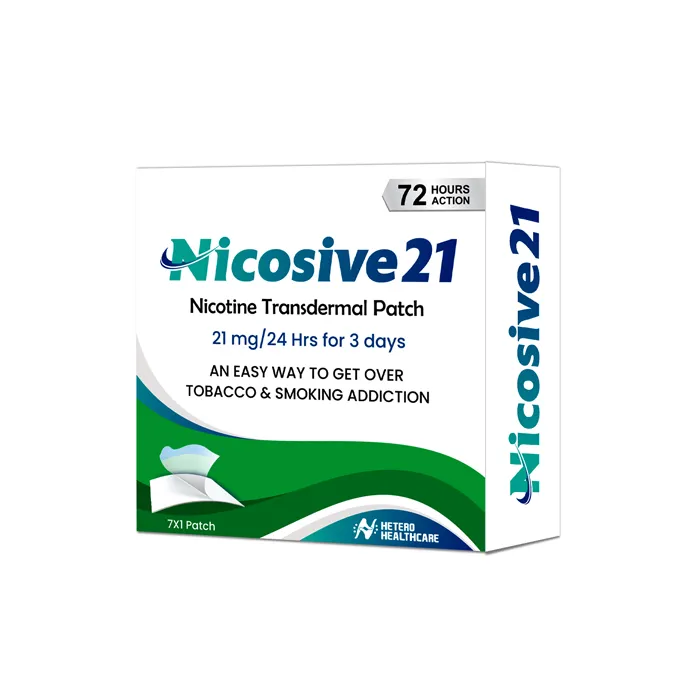
21 mg Nicotine Patch
For higher dependence
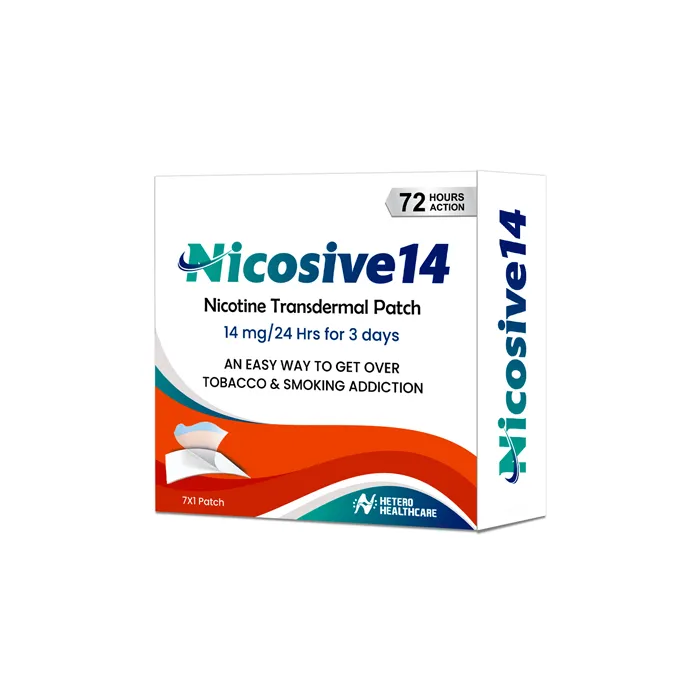
14 mg Nicotine Patch
For moderate dependence or step-down
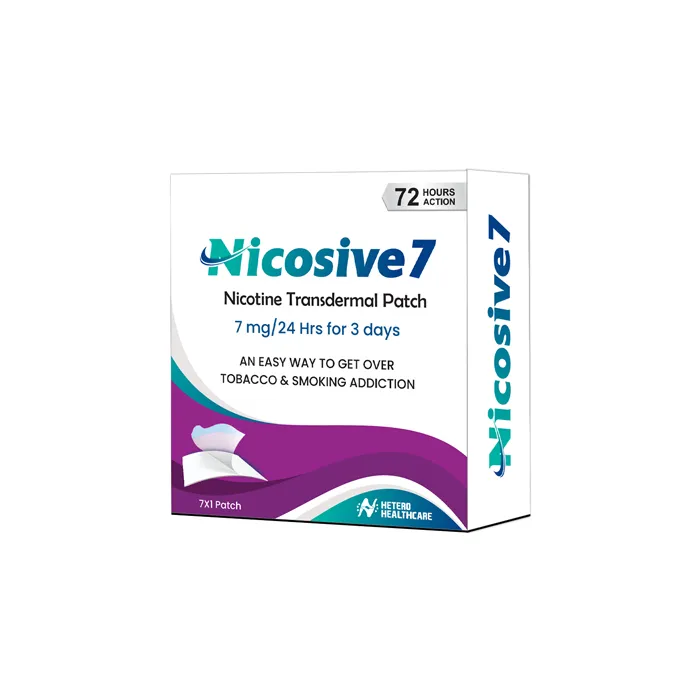
7 mg Nicotine Patch
For lower dependence or final taper
Whether using the 21 mg, 14 mg, or 7 mg nicotine patch, the goal remains consistent:
The goal is gradual reduction - not abrupt deprivation.
Stabilize. Step down. Sustain abstinence.
Disclaimer
Nicosive Nicotine Patch is a prescription medication. Use under medical supervision only. Consult your healthcare professional for personalized dosage.
No two smokers are the same.
Some smoke within minutes of waking. Some mainly during stress. Some smoke heavily throughout the day.
Your dependence level is determined by:
Time to first cigarette
Daily consumption
Strength of cravings
Difficulty avoiding smoking
Cravings are intense - but temporary. Most last only a few minutes.
Breathe Deeply
Slow breathing reduces stress response.
Replace the Cigarette
Use the prescribed nicotine patch for steady 72-hour support.
Exercise Lightly
A short walk reduces craving intensity.
Avoid Triggers
Limit alcohol and early-phase exposure to smoking environments.
Keep Busy
Engagement reduces urge intensity
From the Blog
Sep 30, 2026

Jul 30, 2026
If you’re here, you’ve already taken the first step.
Quitting is not about perfection. It’s about progress.
Every cigarette not smoked is:


Nicosive Nicotine Transdermal Patch. A structured, step-down approach to smoking cessation with 24-hour controlled nicotine delivery.
Quick Links
Nicosive Nicotine Transdermal Patch. A structured, step-down approach to smoking cessation with 24-hour controlled nicotine delivery.