Sep 30, 2026
Jul 15, 2026
Share on :
Published as part of the public awareness initiative by Nicosive
You have probably tried before
Maybe you made it three days. Maybe a whole week.
You threw away the pack, told a few people, felt genuinely proud of yourself - and then something happened. A deadline. An argument. A dull Sunday afternoon. And before you could stop yourself, you were already reaching for one.
Sound familiar? Then this is written for you. Or for someone you love who is in that same cycle right now.
What most people do not realise is that this is not a failure of character. It is biology. Nicotine addiction is a physiological condition - as real and as recognised as diabetes or hypertension - and it responds far better to a structured treatment plan than to sheer willpower alone.
This World No Tobacco Day, we want to walk you through one of the most effective, clinically supported tools available for quitting: the nicotine transdermal patch. Not as a product pitch - but as information every smoker, and everyone who loves one, deserves to have.
India has approximately 267 million tobacco users. Most of them want to quit. Surveys consistently show that the majority of smokers have tried at least once.
And yet, without any structured support, around 90% of those who attempt to quit will relapse within the first week. That is not a statistic about weakness. It is a statistic about the power of nicotine withdrawal.
Here is what happens inside your body when you stop suddenly. For years, nicotine has been triggering the release of dopamine - the brain's feel-good chemical. Over time, your brain scaled back its natural dopamine production, outsourcing the job to cigarettes. When you stop, your brain does not simply resume normal function. It protests - loudly, and physically.
Within 24 hours of your last cigarette, withdrawal symptoms typically peak:
These are temporary. They do pass. But in those first days, they feel anything but temporary - and that is exactly when most people give in.
This is precisely why Nicotine Replacement Therapy (NRT) exists. Not to make quitting effortless, but to make it survivable and sustainable.
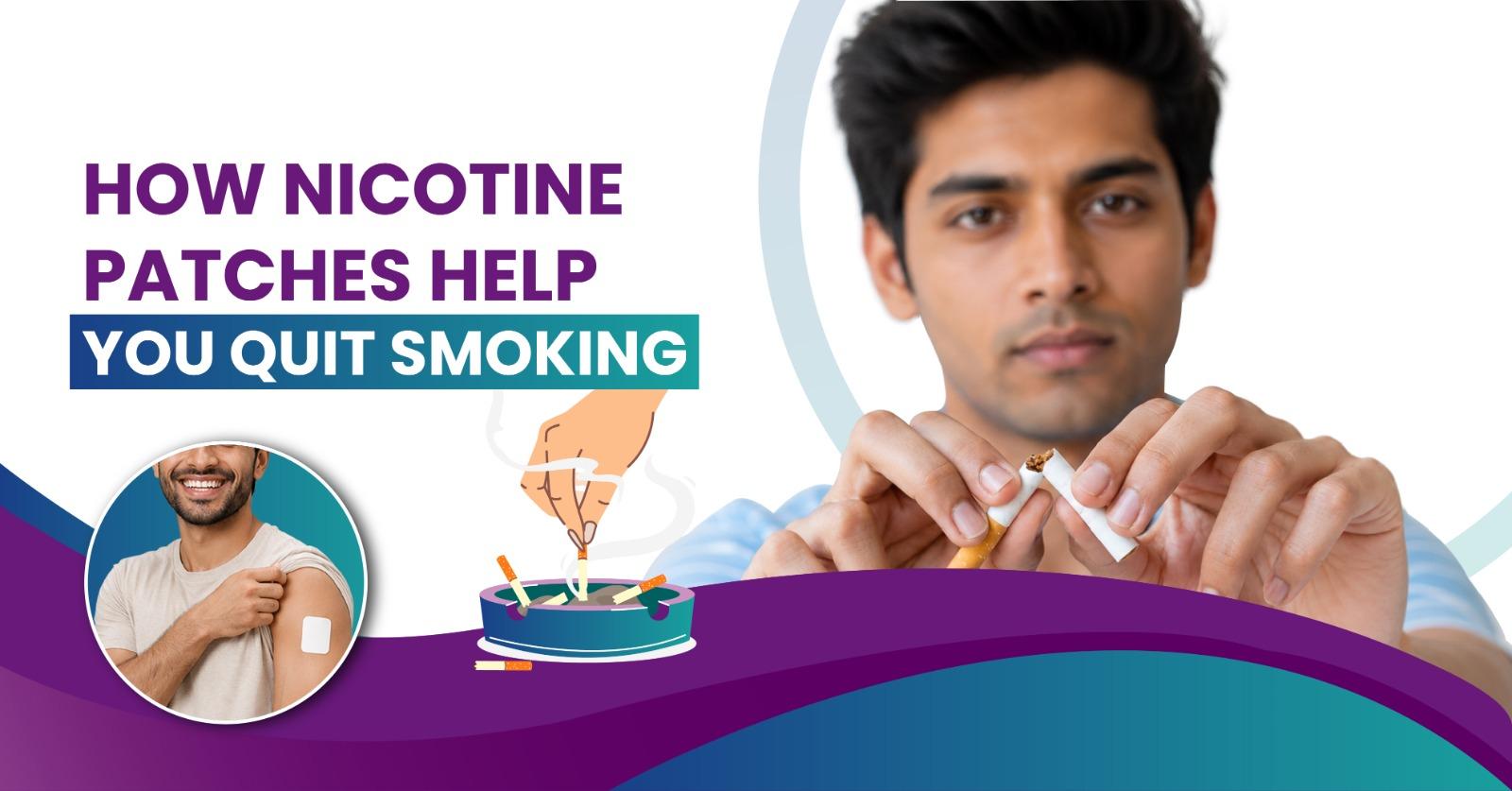
A nicotine transdermal patch is a small, medicated adhesive patch that you apply to your skin. Through a process called Transdermal Drug Delivery (TDDS), it releases a controlled, measured dose of nicotine slowly through the skin and directly into the bloodstream - with no smoke, no tar, no carbon monoxide, and none of the thousands of toxic chemicals found in a cigarette.
| Cigarettes | Nicotine Patch |
|---|---|
| Delivers nicotine in rapid spikes | Delivers nicotine gradually and steadily |
| Nicotine levels rise and fall quickly | Helps maintain more stable nicotine levels |
| Cravings often return when nicotine levels drop | Helps reduce withdrawal symptoms and cravings |
| Contains smoke, tar and combustion-related toxins | No smoke, tar or combustion-related toxins |
| Reinforces the smoking habit | Supports smoking cessation efforts |
A cigarette delivers nicotine as a rapid spike, followed by a drop that can trigger cravings. Nicotine patches work differently by providing a controlled and steady supply of nicotine, helping manage withdrawal symptoms while you focus on breaking the habit of smoking.

Nicotine replacement therapy was formally included in India's National List of Essential Medicines (NLEM) in 2022 - a significant step that recognises its clinical value and supports its availability through the public health system. A Cochrane Review - one of the highest standards of clinical evidence - found that NRT improves the likelihood of quitting successfully by 50 to 60 per cent compared with unassisted attempts.
Nicotine(Nicosive) transdermal patches come in three strengths. The right one depends on how much you currently smoke - and a doctor is always the best person to make that call.

In nicotine patches, "strength" refers to the amount of nicotine delivered by the patch over the recommended period of use. Higher strengths are generally recommended for people with greater nicotine dependence, while lower strengths are used for lighter smokers or during the step-down phase of quitting.
21 mg - for heavy smokers (more than 20 cigarettes a day)
If you smoke heavily throughout the day, first thing in the morning, after every meal, under stress - this is your starting point. Heavy smokers have a stronger physiological dependence and need higher initial doses to manage withdrawal effectively.
14 mg - for moderate smokers (up to 20 cigarettes a day)
The middle strength suits moderate smokers, or serves as the second step for heavy smokers who have begun tapering down.
7 mg - for light smokers or the final step-down phase
The lowest strength is for lighter smokers, or for those who are already in the final stretch of weaning off nicotine entirely.
Most healthcare professionals recommend a step-down approach - beginning at the strength that matches your current habit and reducing gradually over 8 to 10 weeks. This gives your brain the time it needs to recalibrate. Here is what that typically looks like:
| Phase | Duration | Strength | Goal |
|---|---|---|---|
| Phase 1 | Weeks 1-6 | 21 mg | Suppress withdrawal |
| Phase 2 | Weeks 7-8 | 14 mg | Begin tapering |
| Phase 3 | Weeks 9-10 | 7 mg | Complete weaning off |
Important: Dosage, patch strength, and duration must be determined by a qualified healthcare professional based on your personal smoking history, nicotine dependence, and medical history. Do not self-prescribe or combine NRT products without professional guidance.
One of the reasons patches work so well in practice is sheer convenience. You apply it once, and it works for 72 hours. No repeated doses. No remembering to take something three times a day.

A few things to keep in mind: do not cut the patch, do not apply it to broken or irritated skin, do not smoke while wearing it (this raises nicotine to potentially dangerous levels), and never reuse a patch once removed.
Here is something important to understand about nicotine replacement therapy: it handles the physical side of addiction. It quietens the biological storm. But smoking is also a behaviour - and behaviours need to be unlearned.
The morning chai. The after-lunch cigarette. The one you have outside before a big meeting. These are habits built over years, and they are tied to emotions, routines, and social cues. A patch will not automatically dissolve them. But it will give you the mental space to address them - without the added burden of physical withdrawal screaming in the background.
Research from the Cochrane Collaboration shows that combining NRT with behavioural support more than doubles quit success rates compared with either approach alone. Even a brief, structured conversation with a doctor has been shown to meaningfully improve the likelihood of quitting.
Here is a practical method used in structured cessation programmes, called B.R.E.A.K. - for the moments when a craving hits hard:
One more thing: tell someone. A family member, a friend, a colleague. The research is consistent - smokers who quit with social support around them have significantly better outcomes than those who go it alone.
Like any medicated product, nicotine patches can cause side effects in some people. Most are mild and settle within a few days:
These are manageable and temporary for most people. If skin irritation becomes significant, rotating the application site more frequently and ensuring the skin is clean and completely dry before applying usually helps.
Seek immediate medical attention if you experience chest pain, a rapid or irregular heartbeat, severe dizziness, difficulty breathing, or any signs of an allergic reaction while using a nicotine patch.
Pregnant women and individuals with cardiovascular disease, high blood pressure, diabetes, or other chronic conditions should always consult a doctor before beginning any nicotine replacement therapy.
How quickly does a nicotine patch start working?
Most people notice reduced craving intensity within a few hours of their first application. Nicotine reaches steady-state levels in the blood within 6 to 8 hours, so morning application typically provides coverage for the full day.
Can I smoke while wearing the patch?
No - and this is important. Smoking while wearing a patch raises nicotine to potentially toxic levels and can cause serious side effects. The patch is designed to replace cigarettes, not accompany them.
How long will I need to use the patch?
Most structured programmes recommend 8 to 10 weeks in total, stepping down through strengths. Your doctor will determine the exact duration based on your dependence level and how you are progressing.
Are nicotine patches available in India?
Yes. Since NRT was included in India's National List of Essential Medicines in 2022, availability and affordability have improved. Speak to your doctor or pharmacist about accessing nicotine replacement therapy.
What if I relapse?
Please do not give up. A relapse is not a failure - it is information. Most people make multiple attempts before quitting permanently, and each attempt teaches something valuable about the triggers and situations that are hardest for you. Speak to your doctor, adjust the plan, and try again with better support in place.
Do patches work for bidi or smokeless tobacco users too?
Yes. Nicotine replacement therapy is recommended for smokeless tobacco users - gutka, khaini, paan masala - as well as smokers and bidi users. The appropriate starting strength will depend on your daily nicotine intake. Your doctor can guide this.
A final word - to you, or to someone you are hoping will read this
If you are a smoker, here is what the science says: you are not weak for finding this hard. You are fighting a physiological dependency that was designed, quite literally, to be difficult to break. But you can break it - with the right tools, the right support, and a plan that goes beyond sheer resolve.
If you are reading this for someone else - a parent, a partner, a friend - share it with them. Sometimes the most important thing is simply knowing that help exists, that quitting does not have to mean suffering through withdrawal alone, and that a structured, medically supported approach changes the odds dramatically.
The body begins healing faster than most people expect. Within 20 minutes of the last cigarette, blood pressure and heart rate begin to normalise. Within 24 hours, carbon monoxide levels in the blood start to fall. Within weeks, lung function improves. Within months, the risk of heart disease begins to decline. These are not small things.
Controlled nicotine. Confident quitting. It starts with a plan.
Nicosive - a nicotine transdermal patch available in 7 mg, 14 mg, and 21 mg strengths from Hetero Healthcare - will be available at pharmacies soon. This blog is part of an awareness initiative ahead of launch. To be among the first to know when Nicosive is available, and to access more resources on structured smoking cessation, visit nicosive.com.
And if you know someone who has been trying to quit - share this with them today. Sometimes, the right information at the right moment is all it takes to begin.
Medical Disclaimer
This article is published as part of a patient education and brand awareness initiative by Nicosive (Nicotine Transdermal Patch 7 mg / 14 mg / 21 mg), from Hetero Healthcare Ltd. The information provided is for educational purposes only and does not constitute medical advice, diagnosis, or treatment. Always consult a qualified healthcare professional before beginning any smoking cessation programme or nicotine replacement therapy.
Continue Reading
Hello Aravind Useing Sticky Here Testing scroll
Hello Aravind Useing Sticky Here Testing scroll
Hello Aravind Useing Sticky Here Testing scroll
Hello Aravind Useing Sticky Here Testing scroll
Hello Aravind Useing Sticky Here Testing scroll
Hello Aravind Useing Sticky Here Testing scroll
Hello Aravind Useing Sticky Here Testing scroll
Hello Aravind Useing Sticky Here Testing scroll
Hello Aravind Useing Sticky Here Testing scroll
Hello Aravind Useing Sticky Here Testing scroll
Hello Aravind Useing Sticky Here Testing scroll
Hello Aravind Useing Sticky Here Testing scroll
Hello Aravind Useing Sticky Here Testing scroll
Hello Aravind Useing Sticky Here Testing scroll
Hello Aravind Useing Sticky Here Testing scroll
Hello Aravind Useing Sticky Here Testing scroll
Hello Aravind Useing Sticky Here Testing scroll
Hello Aravind Useing Sticky Here Testing scroll
Hello Aravind Useing Sticky Here Testing scroll
Hello Aravind Useing Sticky Here Testing scroll
Hello Aravind Useing Sticky Here Testing scroll
Hello Aravind Useing Sticky Here Testing scroll
Hello Aravind Useing Sticky Here Testing scroll
Hello Aravind Useing Sticky Here Testing scroll
Hello Aravind Useing Sticky Here Testing scroll
Hello Aravind Useing Sticky Here Testing scroll
Hello Aravind Useing Sticky Here Testing scroll
Hello Aravind Useing Sticky Here Testing scroll
Hello Aravind Useing Sticky Here Testing scroll
Hello Aravind Useing Sticky Here Testing scroll
Nicosive Nicotine Transdermal Patch. A structured, step-down approach to smoking cessation with 24-hour controlled nicotine delivery.
Quick Links
Nicosive Nicotine Transdermal Patch. A structured, step-down approach to smoking cessation with 24-hour controlled nicotine delivery.